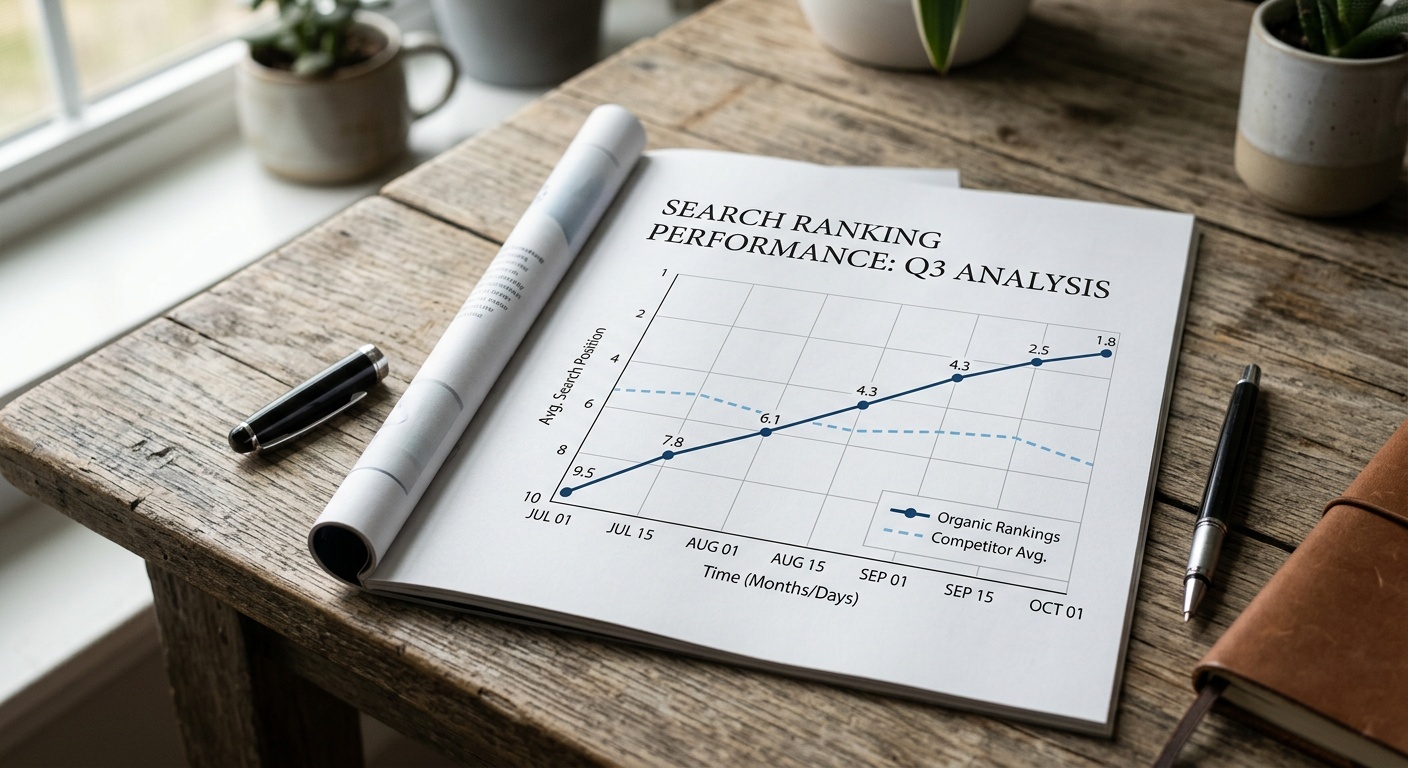
How the Best Digital Marketing Firms Build Organic Search Rankings
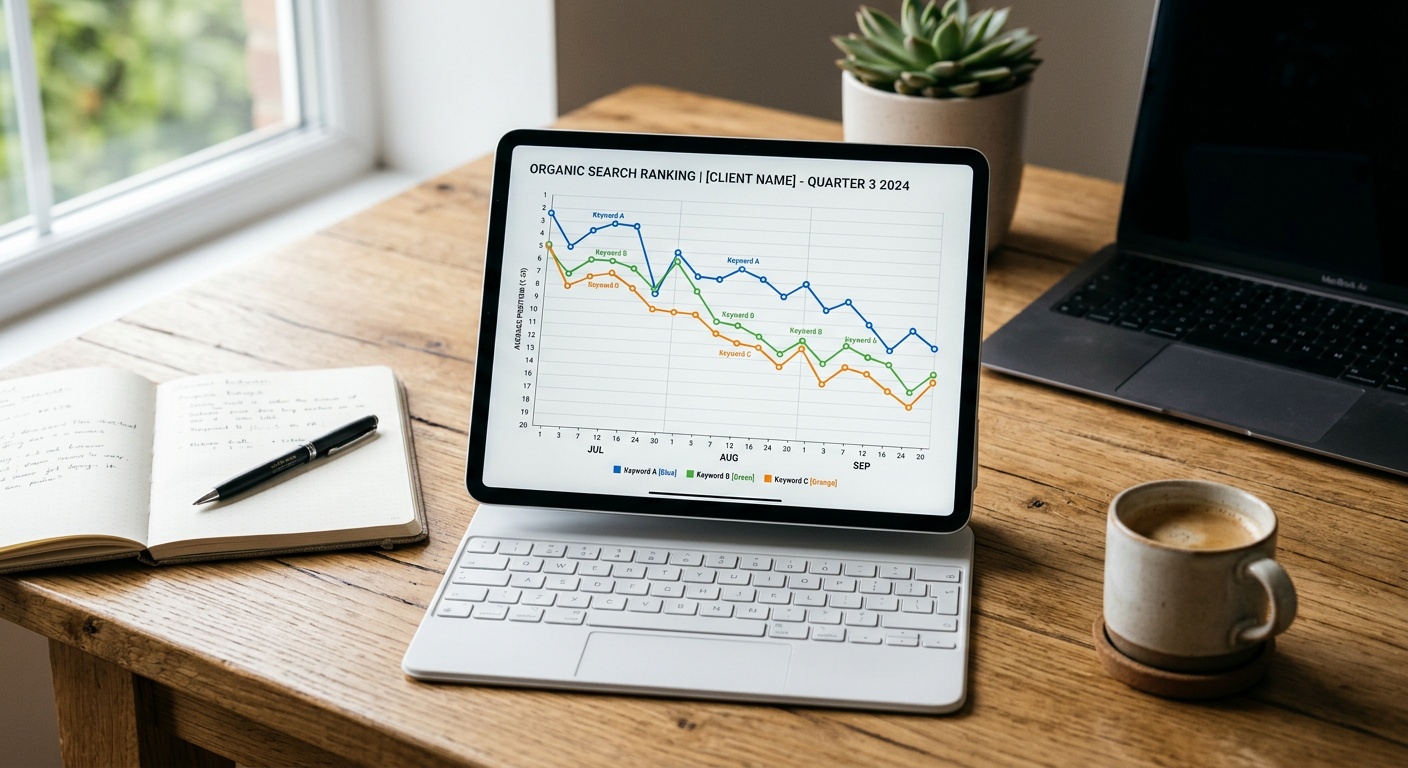
How the Best Digital Marketing Firms Build Organic Search Rankings
Reading time: 14 minutes
Ever watched a competitor’s website climb from page three to position one on Google and wondered exactly how they pulled it off? You’re not alone. In 2026, organic search remains the single most valuable source of sustainable, high-intent web traffic — yet the strategies that actually move the needle have evolved dramatically from what worked even two years ago.
The best digital marketing firms aren’t guessing their way to the top. They’re applying a disciplined, data-informed playbook that blends technical precision with genuine human storytelling. And here’s the straight talk: most brands are still operating on outdated SEO assumptions while elite agencies have already shifted the game board entirely.
This guide pulls back the curtain on those strategies — the specific methodologies, frameworks, and decision-making processes that separate firms generating real organic growth from those simply billing retainers and showing vanity metrics.
Table of Contents
- Why Organic Search Still Dominates in 2026
- The Non-Negotiable Foundation: Technical SEO Done Right
- Content Architecture: How Elite Firms Think Differently
- Building Domain Authority the Right Way
- Navigating AI Overviews and the New SERP Landscape
- Real-World Case Studies: What Actually Worked
- 3 Common Challenges and How Top Firms Overcome Them
- Agency Approaches: A Comparative Breakdown
- FAQs
- Your Organic Growth Roadmap: Next Steps
Why Organic Search Still Dominates in 2026
Despite the explosion of paid media channels, influencer marketing, and social-first strategies, organic search continues to deliver the highest return on investment for long-term digital growth. According to BrightEdge’s 2025 Channel Performance Report, organic search drives 53.3% of all trackable website traffic across B2B and B2C sectors combined — a figure that has remained remarkably stable even as Google’s AI Overviews reshape how results are displayed.
What’s changed isn’t the value of ranking — it’s the nature of what it means to rank. In 2026, visibility extends beyond blue links. It encompasses featured snippets, AI Overview citations, knowledge panels, local packs, and image carousels. The firms that are winning aren’t just chasing position one. They’re engineering omnipresence across the entire search results page.
Here’s why organic search remains the channel worth investing in:
- Trust signals: Users click organic results at 8.5x the rate of paid ads for informational queries
- Compounding returns: Unlike paid campaigns that stop the moment spend stops, organic rankings deliver traffic for months and years
- Intent alignment: Search captures users at the precise moment they’re actively looking for solutions
- Cost efficiency: Average cost-per-acquisition through organic SEO is 61% lower than through paid search over a 24-month window
The Non-Negotiable Foundation: Technical SEO Done Right
Ask any elite agency what separates successful campaigns from stalled ones, and almost universally, the answer starts with technical infrastructure. Content and links can’t save a website that Google struggles to crawl, interpret, and trust.
Core Web Vitals and Page Experience Signals
Google’s Page Experience signals — particularly the Core Web Vitals — have been a ranking factor since 2021, but the thresholds that matter have tightened considerably. In 2026, passing Core Web Vitals isn’t just about avoiding penalties. It’s a competitive differentiator because the majority of websites still fail to hit “Good” status consistently across mobile devices.
The three metrics elite firms obsess over:
- Largest Contentful Paint (LCP): Should be under 2.5 seconds. The average LCP across the web in 2025 was 4.1 seconds on mobile, meaning even modest improvement creates relative advantage.
- Interaction to Next Paint (INP): Should be under 200ms. This replaced First Input Delay and measures overall page responsiveness throughout the session.
- Cumulative Layout Shift (CLS): Should be under 0.1. Unstable layouts destroy user trust and increase bounce rates.
Top firms treat Core Web Vitals as a continuous monitoring function, not a one-time audit. They use tools like Google Search Console, SpeedVitals, and custom RUM (Real User Monitoring) pipelines to catch regressions before they impact rankings.
Crawlability, Indexability, and Site Architecture
One of the most common silent killers of organic growth is poor site architecture — internal linking structures that create crawl dead-ends, excessive thin pages diluting crawl budget, or duplicate content confusing Google’s indexing decisions.
The best agencies conduct quarterly technical audits using a combination of Screaming Frog, Sitebulb, and Google’s own crawl data to identify:
- Orphaned pages with no internal links pointing to them
- Redirect chains longer than two hops
- Canonical tag misconfigurations that fragment page authority
- JavaScript rendering issues that block Googlebot from seeing content
- Duplicate parameter URLs consuming crawl budget unnecessarily
Pro Tip: The most impactful technical fix most mid-size websites can make is establishing a deliberate internal linking strategy. Each high-value page should receive internal links from at least 5-10 relevant pages across the site. This siloing strategy accelerates how quickly new content ranks and redistributes link equity more efficiently.
Content Architecture: How Elite Firms Think Differently
Here’s a scenario: Two brands publish blog posts targeting the same keyword. One publishes a 1,500-word “5 Tips” article optimized for the target term. The other publishes a comprehensive hub page supported by a cluster of ten interlinked supporting articles, each addressing a specific facet of the broader topic. Which one ranks?
Almost always, the second. And this is exactly how top digital marketing firms approach content — not as isolated articles, but as interconnected topic ecosystems.
The Topic Cluster Model in Practice
The topic cluster model, popularized by HubSpot researchers and now standard practice among elite agencies, organizes content around pillar pages that broadly cover a core topic, with cluster content diving deep into subtopics and linking back to the pillar.
In 2026, the model has matured significantly. Here’s what sophisticated implementation looks like:
- Intent mapping before keyword mapping: Firms first map the full spectrum of user intent around a topic (informational, navigational, commercial, transactional) before assigning keywords to content types
- Search journey alignment: Content is designed to serve users at awareness, consideration, and decision stages — not just to capture ranking positions
- Content differentiation: Each piece must offer something measurably different from what currently ranks — original data, deeper expertise, or a distinct perspective
- Structured data integration: Schema markup (Article, FAQPage, HowTo, Product, etc.) is built into every content template to maximize rich result eligibility
E-E-A-T: The Framework That Actually Drives Rankings
Google’s Search Quality Rater Guidelines emphasize Experience, Expertise, Authoritativeness, and Trustworthiness (E-E-A-T) as the qualitative benchmark for high-ranking content. Elite firms have operationalized this framework in concrete ways:
- Author authority signals: Every piece of content is attributed to a named expert with a detailed bio, LinkedIn profile links, and verifiable credentials
- First-hand experience evidence: Content includes original quotes, screenshots, proprietary data, or documented case studies that demonstrate real-world experience
- Editorial review processes: Published content undergoes fact-checking and expert review, with review dates clearly visible
- Transparent sourcing: Claims are backed by citations to authoritative primary sources — academic papers, government data, or recognized industry research
Building Domain Authority the Right Way
Links remain one of the most powerful signals in Google’s ranking algorithm. But the link-building landscape has been transformed by algorithmic updates and Google’s increasing ability to detect manipulative patterns. What works in 2026 looks fundamentally different from what agencies were doing even in 2023.
The emphasis has shifted from quantity to editorial relevance. A single link from a topically relevant, authoritative publication now outweighs dozens of links from generic directories or loosely related sites.
Tactics that elite agencies use to earn high-quality links:
- Original research and data studies: Publishing proprietary surveys, industry benchmarks, or unique datasets that journalists and bloggers naturally cite
- Digital PR campaigns: Pitching data-driven stories to mainstream publications, earning editorial coverage in outlets like Forbes, TechCrunch, or industry-specific media
- Expert contributions: Securing bylines, expert quotes, and contributed articles on authoritative platforms in the client’s vertical
- Resource page link building: Identifying curated resource lists in relevant niches and earning placements through genuine content value
- Broken link building at scale: Using tools like Ahrefs to find broken links on high-authority sites and offering superior replacement content
Navigating AI Overviews and the New SERP Landscape
Perhaps the most significant disruption to organic search strategy in 2025-2026 has been the widespread deployment of Google’s AI Overviews (formerly Search Generative Experience). These AI-generated summaries appear at the top of results for a growing percentage of queries — and they fundamentally change how clicks are distributed.
For many informational queries, AI Overviews now capture a significant portion of engagement before users ever scroll to organic listings. This has created what analysts are calling “zero-click anxiety” among SEO professionals. But the best digital marketing firms have reframed this challenge as an opportunity.
Here’s how elite agencies are adapting:
- Optimizing for AI Overview citations: Google’s AI draws from pages that already rank well and have clear, structured answers. The same E-E-A-T signals that drive ranking also drive AI Overview inclusion.
- Targeting bottom-of-funnel queries: Commercial and transactional queries are less likely to trigger AI Overviews, making them higher-value targets for direct click acquisition
- Building brand search demand: The most defensible traffic is branded search — users looking specifically for your brand. Firms combine SEO with content marketing and PR to grow branded query volume
- Measuring beyond clicks: Leading agencies have updated their KPI frameworks to track impression share, brand awareness metrics, and AI Overview citations alongside traditional click-through data
Real-World Case Studies: What Actually Worked
Case Study 1: SaaS Platform Grows Organic Traffic 340% in 18 Months
A mid-market project management SaaS company engaged a top-tier digital marketing firm in early 2024 with a stagnant organic channel contributing less than 12% of total new user acquisition. The agency’s approach was methodical and sequenced:
Phase 1 (Months 1-3) — Technical Foundation: A comprehensive audit revealed 847 pages with thin content, 34 redirect chains, and critical Core Web Vitals failures on mobile. The agency consolidated duplicate content, fixed architecture issues, and improved LCP from 6.2 seconds to 2.1 seconds on mobile.
Phase 2 (Months 4-9) — Content Architecture: Rather than publishing broadly, the team identified 6 core topic clusters aligned with product use cases and buyer personas. They built pillar pages and supporting cluster content around each, incorporating original survey data from 400 project managers.
Phase 3 (Months 10-18) — Authority Building: A digital PR campaign built around the survey data earned 47 editorial links from publications including Harvard Business Review, Inc., and prominent industry blogs. Domain Rating improved from 38 to 61 within the campaign period.
Result: By Q4 2025, organic traffic had grown 340%, organic-sourced trial signups increased 280%, and the brand achieved position-one rankings for 23 of their 30 target commercial keywords.
Case Study 2: Local Healthcare Network Dominates Regional Search
A regional healthcare network with 12 clinic locations faced an increasingly competitive local search landscape in a major metropolitan area. Their existing SEO strategy focused on a single domain, leaving individual clinic locations nearly invisible in local pack results.
The agency implemented a location-specific content architecture with dedicated landing pages for each clinic optimized for hyper-local intent signals. Google Business Profile optimization, consistent NAP (Name, Address, Phone) citation building, and patient-focused FAQ content tied to local health concerns drove a 195% increase in “near me” query visibility within nine months. More meaningfully, appointment bookings attributed to organic search grew by 167% year-over-year.
3 Common Challenges and How Top Firms Overcome Them
Challenge 1: The Plateau Problem
Many brands experience rapid early gains from SEO, then hit a frustrating plateau where rankings stabilize but don’t improve further. This typically signals that the initial “low-hanging fruit” has been captured but the strategy hasn’t evolved to target higher-competition terms or deepen topical authority.
The solution: Elite firms address plateaus by conducting a competitive gap analysis to identify where competitors have depth of content that their client lacks. They then systematically fill those gaps while simultaneously pursuing authoritative backlinks to boost the domain’s overall competitive ceiling.
Challenge 2: Attribution Complexity
Attributing revenue to organic search is genuinely difficult in multi-touch customer journeys. Many organizations underinvest in SEO because they can’t clearly trace its contribution to revenue — making it harder to justify budgets compared to paid channels with cleaner attribution models.
The solution: Leading agencies build custom attribution frameworks using Google Analytics 4’s data-driven attribution model combined with CRM integration. They track assisted conversions, first-touch attribution, and organic’s influence on later-stage conversion events to build a fuller picture of its revenue contribution.
Challenge 3: Content Quality at Scale
Producing genuinely expert, E-E-A-T-aligned content at the volume required to build topical authority is resource-intensive. Many firms struggle to balance quality with the output needed for comprehensive topic cluster coverage.
The solution: Top agencies have developed hybrid workflows where AI tools handle research aggregation and first-draft structuring, while human subject matter experts provide experiential insights, fact-check claims, and add genuine analytical depth. The AI accelerates production; the human expertise provides differentiation that algorithms reward.
Agency Approaches: A Comparative Breakdown
Not all digital marketing firms approach organic search with the same level of sophistication. Here’s how approaches differ across agency tiers:
| Criteria | Budget Agencies | Mid-Tier Agencies | Elite Agencies |
|---|---|---|---|
| Technical SEO Depth | Basic on-page optimization | Regular audits, Core Web Vitals monitoring | Continuous RUM, custom crawl pipelines |
| Content Strategy | Keyword-based blog posts | Topic clusters, basic pillar pages | Full intent mapping, proprietary data, E-E-A-T optimization |
| Link Building | Directory submissions, PBN risks | Guest posts, outreach campaigns | Digital PR, original research, editorial placements |
| Reporting & Attribution | Rankings and traffic dashboards | GA4 reports, basic conversion tracking | Multi-touch revenue attribution, CRM integration |
| AI Overview Strategy | Not yet addressed | Awareness-level adaptation | Active optimization for AI citations, BFoF targeting |
Organic Search Performance: What Elite Agencies Deliver
Based on aggregated performance data from leading agency case studies published in 2025-2026, here’s a visualization of typical organic growth outcomes across different strategy maturity levels:
Average Organic Traffic Growth (18-Month Period)
Frequently Asked Questions
How long does it realistically take to see organic ranking improvements?
This is one of the most common questions clients ask — and the honest answer varies based on domain age, current authority, competition level, and the completeness of the strategy being applied. For a relatively new domain in a competitive niche, expect meaningful ranking movement for moderate-competition keywords within 4-6 months, with significant traffic growth materializing at the 9-12 month mark. For established domains with existing authority, a well-executed strategy can produce noticeable improvements within 60-90 days, particularly after resolving technical issues. Elite agencies set expectations clearly upfront: SEO is a 12-24 month investment horizon for transformational results, not a 90-day quick fix.
How have AI tools changed how top agencies approach SEO in 2026?
AI has fundamentally changed the efficiency of SEO workflows without changing the underlying principles of what Google rewards. Top agencies use AI for keyword clustering, content gap analysis, technical audit triage, and first-draft structuring. However, the elements that actually drive rankings in 2026 — genuine expertise, original data, authentic brand voice, and earned editorial links — still require significant human investment. Agencies that use AI to replace subject matter expertise typically see short-term output gains followed by quality dilution and ranking declines. The best firms use AI as a research and productivity layer while doubling down on human expertise at the content quality level.
What metrics should I hold a digital marketing firm accountable to?
Beware of agencies that focus exclusively on vanity metrics like keyword rankings or raw traffic volume. In 2026, the most meaningful metrics for organic search performance include: organic-attributed revenue or leads (tracked through CRM integration), organic share of overall acquisition mix, target keyword ranking distribution across position brackets (1-3, 4-10, 11-20), organic conversion rate compared to other channels, and domain authority progression over time. A trustworthy agency will also track AI Overview citation frequency and branded search volume growth as forward-looking indicators of organic channel health. Request monthly reporting that connects organic activity directly to business outcomes, not just search engine performance data.
Your Organic Growth Roadmap: What to Do Starting This Week
The gap between knowing these strategies and actually implementing them is where most brands stall. Here’s a concrete, sequenced action plan to move forward with intention:
- Conduct a technical audit this month. Use Google Search Console to identify your current crawl coverage, Core Web Vitals status, and any manual actions. If more than 15% of submitted pages are excluded from the index, you have foundational work to do before any content investment will compound effectively.
- Map your content against buyer intent. List your top 20 target keywords and categorize each by intent stage. If the majority are informational but your conversion funnel needs commercial-intent traffic, you have a misalignment that needs correcting immediately.
- Audit your competitive backlink gap. Use Ahrefs or Semrush to compare your backlink profile against two direct competitors. Identify the types of sites linking to them but not to you — that’s your link-building target list.
- Set up proper attribution. Before scaling any organic investment, ensure you have GA4 configured with conversion events, CRM integration active, and a baseline measurement of organic-attributed revenue established. You can’t optimize what you don’t measure.
- Evaluate your agency partner honestly. Using the comparison table in this article, assess where your current agency or internal team sits on the maturity spectrum. If you’re operating at the “budget” tier while competing against brands working with elite firms, the strategy gap is likely your biggest obstacle to growth — not resources or market conditions.
The organic search landscape in 2026 rewards brands that commit to genuine expertise, technical excellence, and long-term content investment — and it increasingly punishes shortcuts. As AI reshapes how search results are displayed, the brands that have built real authority and authentic topical depth will be the ones cited in AI Overviews, not just ranking in blue links.
Here’s the question worth sitting with: Is your current organic search strategy building something that will be more valuable in three years than it is today — or are you just renting visibility through tactics that erode with every algorithm update?
The firms that consistently win at organic search have answered that question clearly — and built everything around that answer.